Varshavsky Named Frontiers of Science Fellow for PFAS and Microplastic Contaminants Research
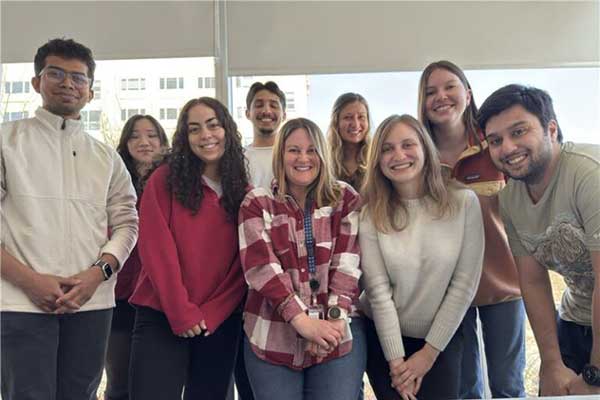
Julia Varshavsky, assistant professor of civil and environmental engineering, jointly appointed in the Department of Health Sciences, was named a 2026 Frontiers of Science Fellow by the National Academy of Sciences. The honor is bestowed on a select few of the country’s brightest scientists aged 45 and younger with demonstrated research excellence and exceptional future potential. Varshavsky will present her research at the 2026 Frontiers of Science Symposium in March, an event founded in 1989 to provide “a forum for the future leaders in U.S. science to share ideas across disciplines.”
Varshavsky will present her research during the Symposium’s “”PFAS, Microplastics, and Forever Chemicals / Unseen Contaminants” panel. A member of Northeastern’s Plastics Center and PFAS Project Lab, she studies how environmental chemical mixtures impact human health and how these insights can lead to interventions to protect susceptible and highly exposed populations.
Plastics, PFAS, and Public Health
Plastics are everywhere, from food packaging to clothing, and are a major source of environmental chemical exposure for humans. Science has yet to discern the impact of our plastics-reliant world on human health, and the field is emerging as one of the most closely watched in environmental and health sciences. “I’ve focused my study on maternal-child health,” said Vashavsky. “I want to understand how exposure to PFAS, microplastics, and their additive chemicals affect expectant mothers and their newborn children.”
Not all plastics are created equal, Varshavsky explains. There are thousands of different kinds of plastics, each representing a potential danger to human health. “Manufacturers add various chemicals when creating plastics to achieve different product goals. For example, phthalates are added to make plastics softer, and bisphenols are added to stiffen them.” Increasingly, many additives like PFAS and phthalates are being linked to a widening array of health issues. “Microplastics and their additives migrate from packaging into our food, into our skin from our clothing; they off-gas from products into the air we breathe, and find their into our water and soils.”
Focusing her research on expectant mothers and their children, Varshavsky wants to understand how our everyday plastics exposure is affecting these populations at such critical and vulnerable stages of development. These chemicals are already linked to problems like endometriosis and hypertensive disorders of pregnancy. “I want to go beyond understanding the issue as a scientist, however.” said Varshavsky. “How do we translate our research into actionable information for those that need to know?” Her research group reports back to study participants with information on their exposures and how to reduce them. “We also conduct systematic reviews to try and make sense of all the data and inform decision making at the federal level as well as the community level. For example, we encourage people who are worried about their PFAS levels to get their water tested.”
“We want to present the research in ways that informs people about how to protect themselves from exposures. Ultimately, I want my research to advance policy and the way chemical risk assessment is done in the United States.”