
Co-op & Experiential Learning
Combining rigorous academics with a variety of experiential learning opportunities
Northeastern’s approach to education combines rigorous academics with experiential learning anchored by our world-renowned cooperative education program. Experiential learning encompasses our co-op program as well as project-based learning, research, global experiences, service learning, and student organizations.
Cooperative Education
Cooperative Education (co-op) is an educational model providing undergraduate and graduate students the opportunity to alternate between periods of academic study and full-time employment to gain hands-on, professional experience in their field of interest, and build personal connections and contacts. With hundreds of employer partners in Boston, across the country, and around the world, civil and environmental engineering co-op students graduate with not only a degree, but also invaluable connections and proven experience in their chosen field.
Advantages of Northeastern's Co-op Program
- Generally competitively paid, full-time positions where the student is integrated with an employer partner and working on real-world projects.
- Longer duration than a typical summer internship. Co-ops are six months in duration for undergraduate students, while graduate students have optional 4, 6, or 8-month opportunities.
- A dedicated team of co-op coordinators coach students through the co-op search process and support them through their co-op experience.
- Co-op coordinators maintain relationships with employer partners to provide students with robust co-op opportunities.
- Provides a holistic learning model including preparation (introduction to co-op course), work (full-time co-op employment), and reflection (interpreting the experience).
Building on Her Co-Op Experiences
Carrie Tam, BS, Civil Engineering & Architectural Studies, applied her co-op experience at Walker Consultants to the US Department of Energy’s Solar Decathlon competition, bringing the Northeastern team to the national finals.
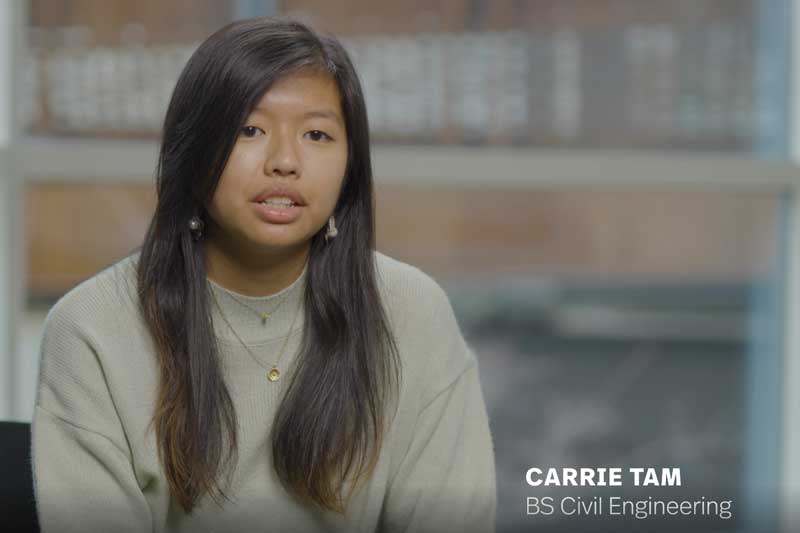
Civil Engineering Co-op Experience
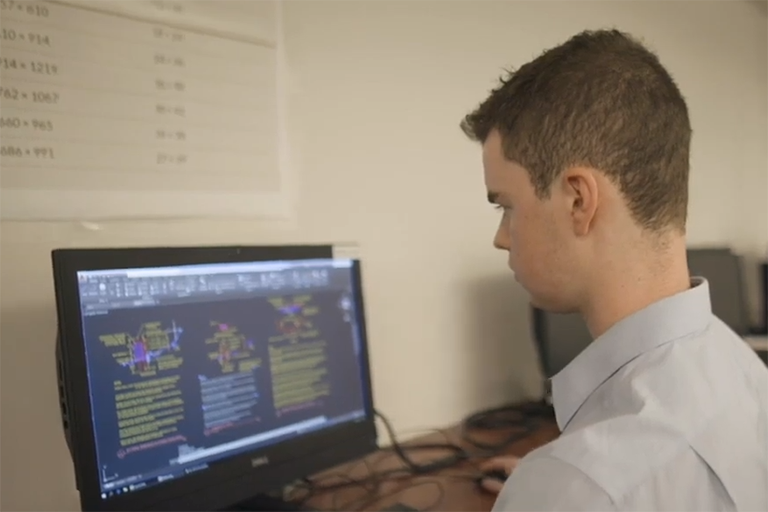
Jude Arbogast, BS, Civil Engineering, has done two co-ops at Suffolk Construction—one in scheduling and staffing, and the other in the field where he found his love of construction management. He says co-op allowed him to put his knowledge to the test and find out what he really wanted to do.
Environmental Health Hands-On Experiences
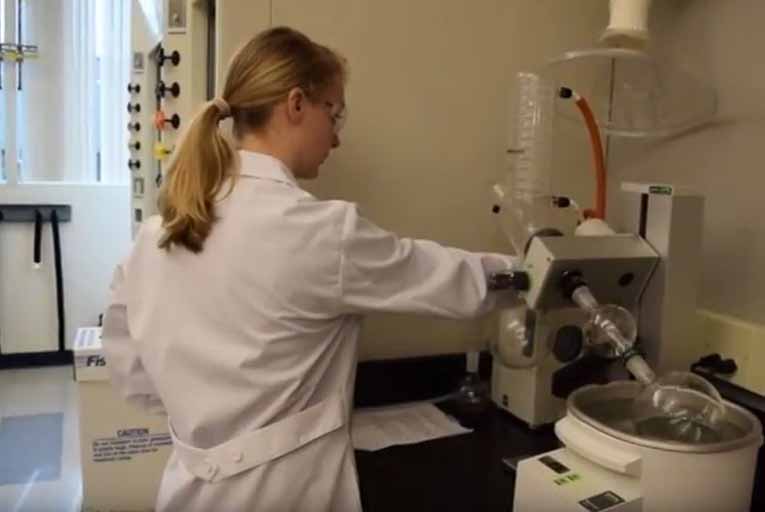
Anna Walsh, a fifth year student with an independent environmental health major, studies a variety of environmental contaminants. She describes two projects, one on air sampling and the other developing a framework for passive samplers for water samples. She did a co-op at Stockholm University in an environmental department getting significant experience.
Student Clubs and Global Experiences
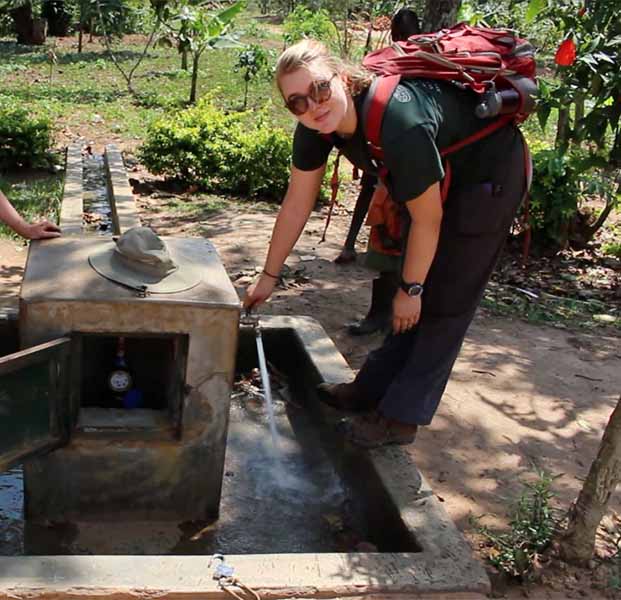
Engineers Without Borders
Engineering without Borders (EWB) is one organization at Northeastern that allows students to travel to countries such as Uganda and Honduras to address their need for potable water. Since 2004 this student group has designed and constructed water projects in six communities, directly affecting over 2,000 individuals. Northeastern’s experiential philosophy allows students to become real world engineers while they are still learning in the classroom.
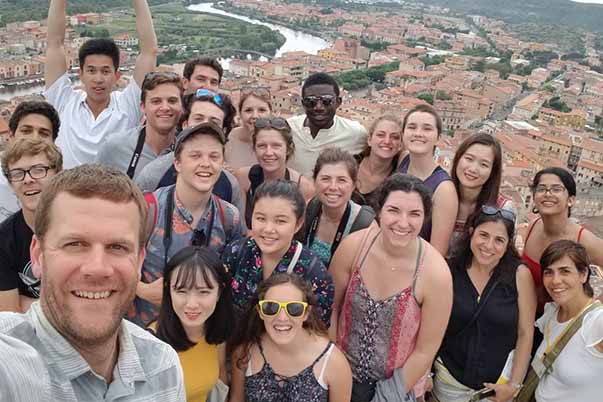
Dialogue of Civilizations
One example of a Dialogue of Civilizations is Sustainable Waste Management: European Practices for Resource Recovery and Environmental Protection led by Teaching Professor Annalisa Onnis-Hayden. Students travel to Cagliari, Italy and immerse themselves in the Sardinian and Italian culture while sailing the Mediterranean Sea, and learning about the rich history and traditions, while enjoying the crystal-clear water, white sand, and the mountains of this special island.
Student Experiences
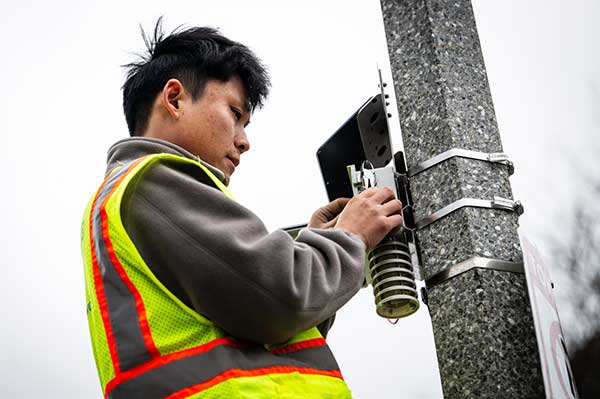
Two Engineering Students Help Address Community Problems in Roxbury and Dorchester
Northeastern students Ruifeng Song, PhD, civil and environmental engineering, and Kriish Hate, MS’26, mechanical engineering, are a part of a project called Common SENSES–an initiative aimed at giving community members hard data through sensors and an interactive map to back up claims of pollution problems in the area.
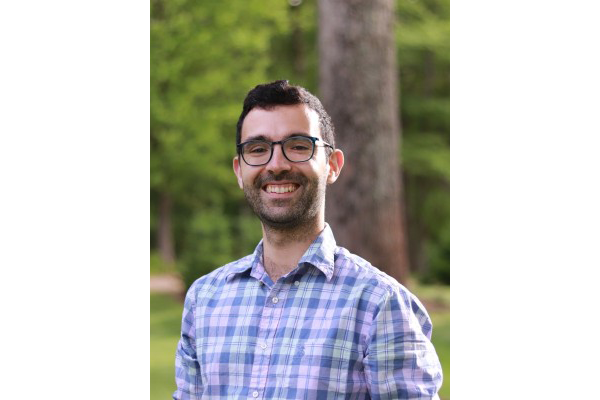
Improving Lives by Exploring Urban Mobility and Transportation
Nail Bashan, PhD’26, civil and environmental engineering, graduates this March ready to bring his transportation research expertise to industry, where he aims to translate complex data science into practical solutions that improve how people move through their communities.

Forecasting for Meaningful Climate Solutions
Puja Das, MS’22, PhD’25, civil and environmental engineering, grew up in Bangladesh, where she saw there was a need for intensive research on the climate. She has dedicated her studies to finding the most accurate and precise forecasting models to help prepare for and mitigate climate disasters.
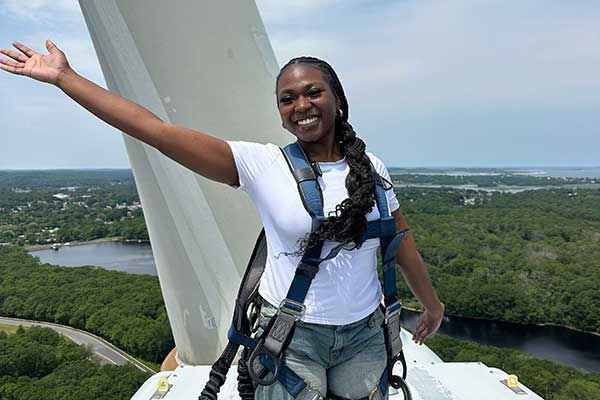
Helping Communities Impacted by the Climate Crisis
Raiana Sumpter, E’27, environmental engineering, cares deeply about two things: protecting vulnerable communities from climate change and building a more sustainable future for everyone. Through her classes and work experience, she has contributed to projects that address these challenges. She hopes to continue working on sustainable solutions in engineering.