Multifactorial Causes of Himalaya Flood Devastation
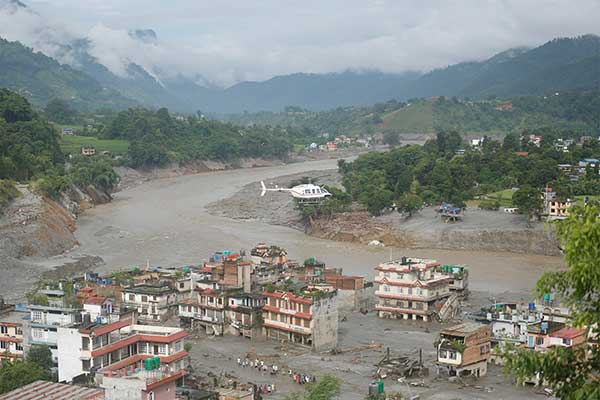
CEE Distinguished Professor Auroop Ganguly explains that the catastrophic devastation from the recent flood in Nepal and Tibet was driven by a combination of natural triggers—such as a dislodged glacier chunk mixing with monsoon sediments—and human factors like land-use choices, lack of infrastructure preparedness, and high regional vulnerability.
This article originally appeared on Northeastern Global News. It was published by Cyrus Moulton. Main photo: Floodwaters crashed through Nepal and Tibet on Wednesday causing devastation due to multiple factors, Northeastern experts said. Photo by Sanjit Pariyar/NurPhoto via AP
Many causes for floods, many causes for their devastation
Hydrologist Auroop Ganguly said the devastation from Wednesday’s flood in Nepal and Tibet was due to a “combination of factors” both natural and man-made.
The flood that swept through the border region of Nepal and Tibet this week killing hundreds and leaving thousands missing is believed to have been triggered by a massive piece of rock and ice that broke off from a mountain glacier in the Himalayas. But the devastation wrought by the deluge was likely the result of both natural and man-made factors, Northeastern University experts said.
“Almost none of the destructiveness of floods these days is fluid dynamics alone,” said Auroop Ganguly, a hydrologist and distinguished professor of civil and environmental engineering at Northeastern. He explained that the precipitous fall of the chunk of ice and rock caused landslides which were further exacerbated by the fact that rivers and watersheds in the region were already waterlogged as a result of the seasonal monsoon rains.
“The huge debris of the glacier chunk mixed with the monsoon sediments…and combined with the lack of preparedness and high vulnerability and exposure – especially in the transboundary mountain regions – led to the massive devastation,” said Ganguly, who in 2019 and 2023 led a Dialogue of Civilizations, a faculty-led intensive learning experience for students, which visited Nepal and areas of the Indian Himalayas.
Wednesday’s tragedy in Asia is just the latest mass flood event to make headlines in recent years. Parts of the Midwest were inundated by floodwaters following heavy rains earlier this month. In July last year, at least 100 people, including campers and counselors from the all-girls Camp Mystic near Kerrville, Texas, were swept away when the Guadalupe River rose from 1.73 feet to 34.29 feet in three hours, following record-breaking rainfall. Floods also devastated the Caribbean nation of Haiti in 2021 and 2023.
Read full story at Northeastern Global News